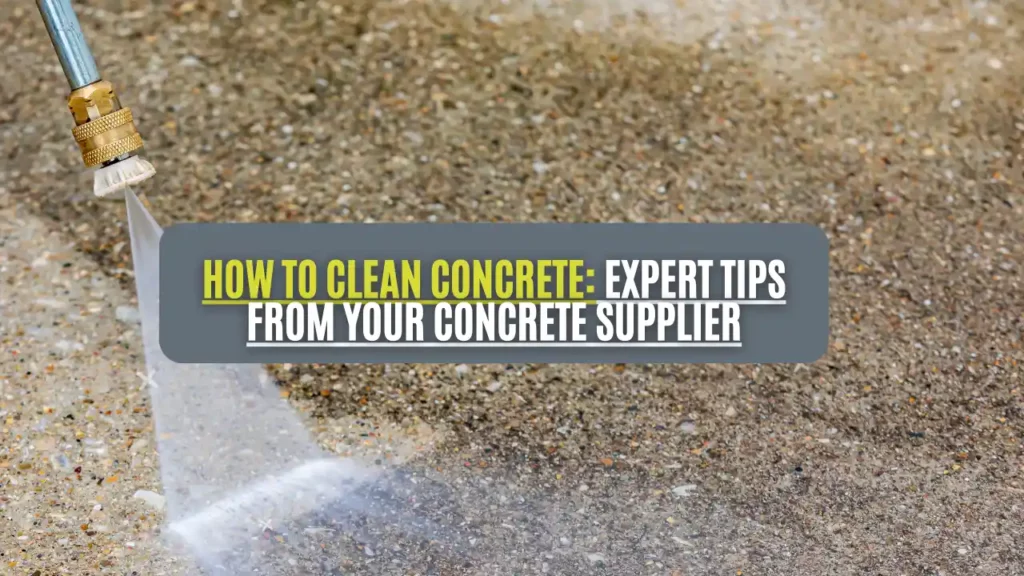
Concrete is a tough, durable material, but that doesn’t mean it won’t get dirty. Whether it’s a concrete driveway, patio, garage floor, or a slab that’s seen better days, you’ll want to give it a bit of TLC to keep it looking schmick.
If you’re not sure where to start, no worries. We’ve got the best tips to help you clean concrete like a pro, straight from your trusted concrete supplier. This guide covers everything from prep and pressure washing to tackling oil stains, rust, and efflorescence, plus how to handle different concrete finishes and when it’s worth calling in the pros.
Preparing for Concrete Cleaning
Before you dive into cleaning your concrete surfaces, a bit of prep work goes a long way. Start by clearing away any loose debris like dirt, leaves, or twigs. A good sweep with a broom or a quick blast with a leaf blower should do the trick. Check for mildew stains as part of your initial assessment of the concrete surface. If you spot any stubborn stains or dirt build-up, you might need to bring out the big guns. A heavy-duty cleaning solution or a pressure washer can make light work of these tougher spots.
Don’t forget to check the weather forecast. Concrete cleaning during heavy rain or under the blazing sun isn’t ideal. Aim for a mild, dry day so the cleaning process goes smoothly and your concrete surfaces dry properly.
A few basics worth having on hand before you start:
- Stiff-bristled nylon brush or push broom
- Bucket and garden hose (pressure washer optional)
- Cleaning solution suited to the stain type
- Safety gear: gloves, eye protection, and closed-toe shoes
- Rags or old towels for spot spills
What’s the Best Way to Clean Concrete?
Let’s be honest, concrete cops a lot. From oil spills, oil stains, and grease stains to rust marks and plain old dirt, it’s bound to need a solid clean every now and then. Using a concrete sealer is a good way to protect the surface and make future cleaning easier. But don’t stress if you don’t have one, cleaning concrete doesn’t need to be a massive headache. Here are a few tools and techniques to get the job done right:
- Pressure washer. Pressure washing concrete is a highly effective method. High water pressure blasts away grime, mildew stains, and even oil stains without you needing to scrub for hours.
- Good old scrub. Don’t have a pressure hose? No dramas. A stiff-bristled nylon brush and some elbow grease can do the trick. Pair that with a good cleaning solution like a mix of warm water and powdered laundry detergent, and you’ll be laughing.
- Environmentally friendly solutions. If you’re keen to keep things green, natural cleaners like distilled white vinegar work well. It’s great for tackling tough stains and doesn’t involve harsh chemicals that could damage your concrete or surrounding plants. Baking soda is another good option because it absorbs excess grease and moisture from spills while staying safe for the environment. For tough rust stains, consider using a purpose-made rust remover.
Step-by-Step Cleaning Process for Concrete Surfaces
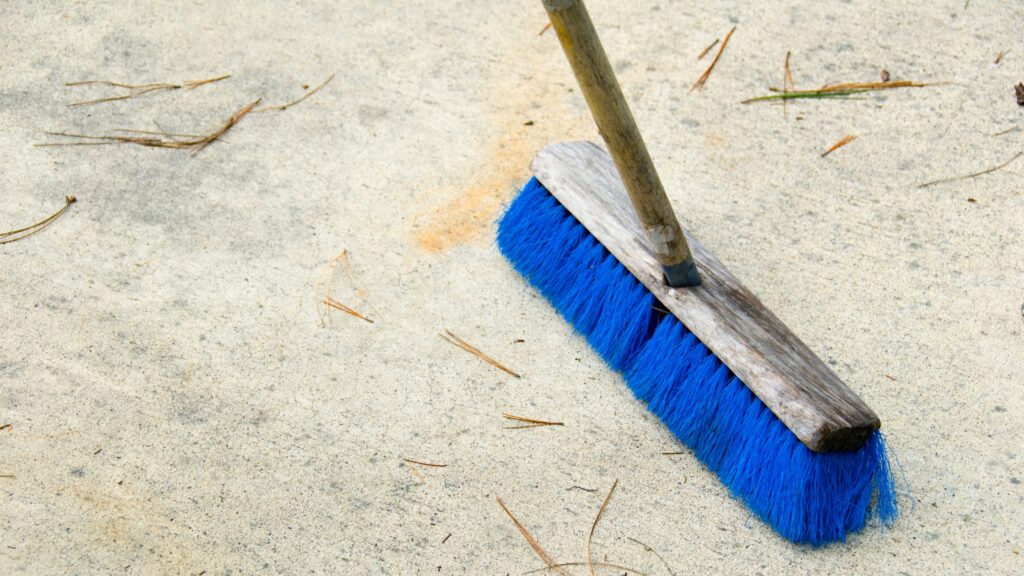
Whether it’s a driveway, concrete patio, or floor, here’s a simple breakdown of how to clean your concrete like the professionals:
- Clear the area. Before you even think about cleaning, get rid of any loose dirt and debris. Sweep it up with a stiff broom or use a garden hose with a spray nozzle to blast away dirt.
- Pre-treat stains. Got stubborn oil stains? Hit them with a bit of dishwashing liquid and hot water. Or sprinkle baking soda directly on the stains to absorb excess grease and moisture. Let it sit for 10 to 15 minutes to loosen up the grime before scrubbing with a stiff brush or nylon brush.
- Pressure wash. For larger surfaces like concrete driveways or patios, pressure washing is your best mate. Use a pressure hose on a medium setting to blast away dirt, mildew, and rust stains. Keep the nozzle at least 30 cm from the surface to avoid damaging the concrete.
- Spot clean tough stains. Really tough stains like rust or tyre marks might need a commercial concrete cleaner or rust remover. Follow the manufacturer’s instructions and wear protective gear because these products can be pretty harsh.
- Rinse with fresh water. After scrubbing or pressure washing, rinse the entire surface with fresh water to remove any leftover cleaning solution.
- Let it air dry. Finally, let your concrete dry completely before walking or driving on it. This step is especially important for concrete driveways, since any leftover moisture could weaken the surface over time.
Should You Pressure Wash Concrete?
You’ve probably heard a few myths about pressure washing. Some say it’s too harsh, others swear by it. So what’s the verdict? In our expert opinion, pressure washing is safe for most concrete surfaces as long as you don’t go overboard with the water pressure. Stick to a medium setting and keep the nozzle moving to avoid concentrating the stream in one spot for too long. Pressure washing is also highly effective for removing mildew, and for surface stains it usually beats scrubbing by hand.
A few practical pointers if you’re pressure washing:
- Keep the nozzle 30 cm or more from the surface
- Work in overlapping passes rather than sitting on one spot
- Use a fan tip rather than a pinpoint tip
- Pre-treat oil and grease before you start blasting
How to Clean Concrete Without a Pressure Washer
No pressure washer? No worries. You can still get your concrete floor and other concrete surfaces looking spick and span with some simple tools:
- Broom and scrub brush. Start by sweeping up loose dirt, then tackle stains with a stiff brush or nylon brush and your chosen cleaning solution.
- Hot water and detergent. For oil stains, a mix of hot water and dishwashing liquid works a treat. You can also use powdered laundry detergent. Scrub the area with a stiff-bristled brush, then rinse with fresh water.
- Baking soda and vinegar. For oil stains, sprinkle baking soda directly on the stain to absorb excess grease and moisture. Follow up by pouring vinegar over the area, let it fizz and sit for a few minutes, then scrub with a brush and rinse with water.
- Distilled white vinegar. If you’re dealing with rust or mildew, vinegar’s a natural and effective option. Pour it over the stained area, let it sit for a few minutes, then scrub and rinse.
If you’re planning a bigger project like a new driveway or shed slab, our small batch concrete delivery service saves the hassle of mixing yourself.
Dealing with Stubborn Stains: Oil, Grease, Rust and Efflorescence
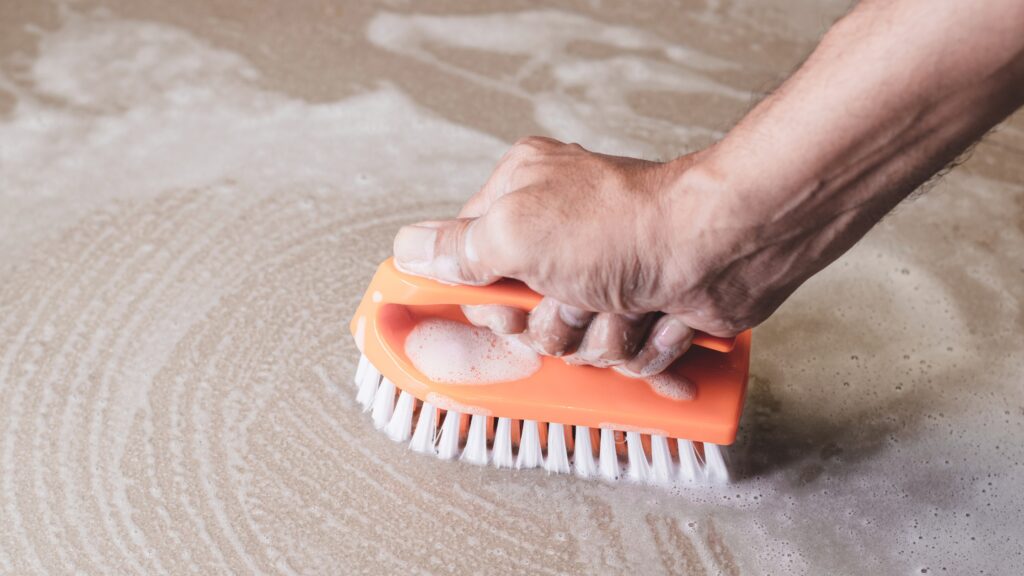
Concrete can soak up stains like a sponge, especially if it’s unsealed. Here’s how to tackle the big ones:
- Oil and grease stains. Pour a bit of dishwashing liquid or degreaser over the stain, scrub it with a stiff-bristled brush, then rinse it off with hot water. For deeper stains, a poultice made from baking soda and water left overnight can help draw the oil out.
- Rust stains. These can be a bit more stubborn. A commercial rust remover or a mix of vinegar and water usually does the trick. Apply it to the stain, let it sit, then scrub and rinse.
- Tyre marks. Pressure washing usually works well, but if the marks are really set in, you might need a commercial cleaner designed for rubber stains.
- Efflorescence. That chalky white residue you sometimes see on new or damp concrete is efflorescence, salts drawn to the surface by moisture. A stiff-bristled brush and clean water knock off the loose deposits. If it’s persistent, an efflorescence remover from a hardware store will handle it. Once the surface is dry, sealing helps stop it coming back.
- Paint or adhesive drips. Scrape off what you can with a plastic scraper, then apply a paint or adhesive remover suited to concrete. Follow the label instructions and rinse thoroughly.
For most stubborn stains, matching the cleaner to the stain type is the biggest factor. Degreaser or dishwashing liquid for oil, rust remover or vinegar for rust, and pressure washing for tyre marks, with commercial cleaners as backup for anything that hangs around.
Cleaning Different Types of Concrete Finishes
Different concrete finishes need different TLC. Here’s how to handle each one:
- Polished concrete floors. Use a gentle cleaning solution and a soft-bristled brush to avoid scratching the surface. A mix of warm water and mild detergent usually does the trick.
- Painted concrete floors. Stick to a mild cleaning solution and a soft-bristled brush to keep the paint intact. Avoid harsh chemicals that could strip the paint.
- Stamped concrete floors. These have a textured surface, so use a gentle cleaning solution and a soft-bristled brush to avoid damaging the pattern.
- Sealed concrete floors. Sealed surfaces need a bit of extra care. Use a gentle cleaning solution and a soft-bristled brush so you don’t damage the sealant.
Always check the label on your cleaning products to make sure they’re suitable for your specific type of concrete finish. If you’re not sure what finish you’ve got, err on the side of gentle and test a small hidden area first.
Regular Maintenance and Getting Concrete White Again
Regular maintenance is the best way to keep your concrete looking good. A quick sweep or wash down every few months with a mild detergent will prevent stains from setting in and save you a heap of hard yakka down the track.
If your concrete has started to look dull or discoloured over time, especially from weather exposure, a few habits will bring it back:
- Pressure wash regularly. Keep up with regular maintenance using a pressure washer. This blasts away dirt and stains before they get too set in.
- Use a commercial cleaner. For those stubborn stains, a specialised concrete cleaner will bring back that fresh, clean look.
- Avoid harsh chemicals. While it might be tempting to go hard on stains with strong chemicals, they can actually damage your concrete in the long run. Stick to the right tools and cleaning solutions to keep your concrete in top shape.
- Reseal every few years. A fresh coat of concrete sealer keeps water, oil, and grime from soaking into the slab, which makes every clean easier from then on.
The same routine works for concrete patios that have gone grey or blotchy. Experiment with the milder options before reaching for anything aggressive.
If you notice cracks appearing during a clean, don’t just seal over them. Have a read of our guide on repairing cracked concrete for the right fix.
Should I Hire Professional Cleaners?
Look, cleaning concrete yourself is doable, but if your concrete surface is heavily soiled or you’re dealing with large areas, it might be worth calling in the pros. Professional cleaners have industrial-strength pressure washers and commercial-grade cleaners that can save you time and effort.
Signs it’s time to hand the job over:
- The surface is big enough that DIY would take a full weekend
- Stains have soaked deep and household methods haven’t shifted them
- You’ve got hazardous substances involved (paint, solvents, chemicals)
- The concrete needs repair as well as cleaning, like fixing uneven concrete or resealing after cleaning
For a straight-up domestic driveway or patio, DIY usually gets you most of the way there for the cost of a bag of laundry detergent and an afternoon’s work.
Ready for Your Next Concrete Project?
Cleaning concrete might seem like a tough job, but with the right tools and a bit of know-how, it’s easier than you think. Whether you’re pressure washing a driveway, scrubbing a patio, or tackling oil stains in the garage, these tips from your concrete supplier will have your concrete looking as good as new.
Regular sweeping, quick spot cleans, and an occasional pressure wash go a long way. Reseal every few years, deal with stains before they set, and match your cleaning method to the finish so you don’t do more harm than good.
If you’re planning a new concrete pour, whether it’s a driveway repair, a shed slab, or a small patio project, get an instant quote using our online calculator or contact the friendly team at Concrete Taxi. We proudly support customers nationwide, so check out the Australian regions we service to find your closest depot.
Frequently Asked Questions
A quick sweep every few weeks and a proper wash every three to six months is enough for most concrete driveways. If you’re in a shady, damp spot where mould and mildew build up faster, bump the wash frequency to every two to three months. Spot-clean any oil or grease spills as soon as they happen so they don’t have time to soak into the slab.
Yes, diluted bleach works well on mould and mildew on unsealed concrete. Mix one part household bleach with three parts water, apply, let it sit for around 10 minutes, scrub, then rinse thoroughly. Avoid bleach on coloured, stamped, or sealed concrete because it can strip pigment and dull the finish. Keep it well away from garden beds and lawns since it will kill nearby plants.
Regular household vinegar used briefly for stain removal won’t damage concrete. Trouble starts if you leave it sitting on the surface for hours or use it repeatedly on sealed or polished concrete, since vinegar is mildly acidic and can etch the surface or dull a sealer over time. Apply, scrub, rinse straight after, and you’ll be right.
For fresh oil stains, a household degreaser or dishwashing liquid with hot water usually handles it. For older set-in stains, a poultice made from baking soda and water applied overnight helps draw the oil out of the slab. Really stubborn cases might need a purpose-made concrete degreaser or, worst case, professional pressure cleaning to shift them.
Sealing after a thorough clean is a smart move, especially for driveways, patios, and garage floors. A good concrete sealer stops water, oil, and stains soaking in, which makes future cleaning far easier. Let the concrete dry completely (at least 24 hours) before sealing. Reseal every two to three years for surfaces that cop weather or heavy traffic.