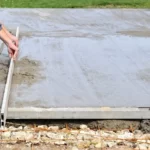
You have finished the pour, screeded it flat, and the surface has gone from wet and shiny to dull. So it is done, right? Not quite. Concrete curing time is the part of the job most people underestimate, and getting it wrong is one of the easiest ways to end up with a slab that cracks, dusts, or never reaches the strength it was mixed for.
The short version: you can usually walk on a slab after 24 to 48 hours, drive a car on it after about 7 days, and it hits its full design strength at 28 days. But those are guidelines, not guarantees. What actually happens under your slab depends on the mix, the thickness, and, if you are pouring anywhere around Brisbane, the weather on the day.
This guide covers what curing actually is, what happens at each stage, how Brisbane’s heat and storm season change the plan, and what you can do on the day to give the pour the best shot.
Curing and Drying Are Not the Same Thing
This is the bit that trips most people up.
Drying is water evaporating out of the surface. It is why the shine goes off a fresh slab after a few hours. It tells you nothing useful about strength.
Curing is a chemical reaction called hydration. Cement and water react and form crystals that lock the aggregate together. That reaction needs moisture to keep going. If the water evaporates before the cement has finished reacting, the reaction stops early, and the slab never gets to the strength it was designed for.
Here is the counterintuitive part: a slab that dries fast is usually a slab that cured badly. Losing surface moisture in the first day or two is the problem, not the goal. That is why proper curing is mostly about keeping moisture in, not letting it out.
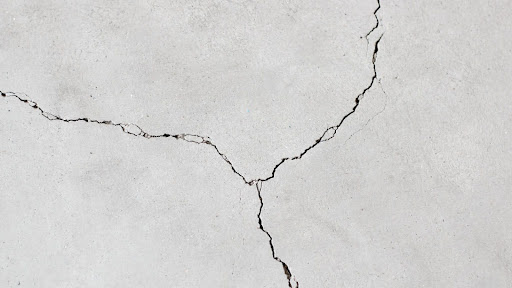
A slab can look and feel solid after 24 hours and still be nowhere near its rated strength. Loading it too early, or letting it dry out too fast, can leave permanent weakness you cannot see from the surface. It shows up later as surface dusting, scaling, or what causes concrete to crack.
The Concrete Curing Timeline: What Happens and When
Concrete strength is measured at 28 days. Under AS 1379, the Australian Standard for the supply of concrete, test cylinders are typically tested at 7 days and 28 days, and the 28-day figure is the one that defines the mix. When you order 25 MPa concrete, that means 25 MPa at 28 days, not on the day you pour it.
Here is roughly how it builds.
First 24 to 48 hours
The most important window in the whole process. Hydration is running hardest, and the slab is at its most vulnerable to moisture loss.
Keep it wet, keep it covered, and keep everything off it. Most slabs are firm enough to walk on carefully after 24 to 48 hours, though in cooler weather or on a thicker pour it can take longer. Press a thumb into an edge. If it marks, give it more time.
Days 3 to 7
This is the standard curing period. AS 3600, the Australian Standard for concrete structures, sets a minimum curing period of 3 days, extending to 7 days depending on the exposure classification of the job. Most residential work sits at the 7-day end.
By day 7, a properly cured slab has typically reached around 70 to 75 per cent of its 28-day strength. That is usually enough for light passenger vehicles on a driveway, and it is generally when formwork comes off. It is not enough for anything heavy.
Day 28 and beyond
The slab reaches its full design strength. Caravans, boats, trailers, work vehicles, and any concentrated heavy load should wait for this mark. Concrete keeps gaining strength slowly for years afterwards, but 28 days is the number everything is designed around.
A practical summary for a standard residential slab:
- Walk on it: 24 to 48 hours
- Strip formwork: 3 to 7 days
- Light vehicle traffic: 7 days
- Heavy loads and full design strength: 28 days
Thickness matters too. A path poured at 100mm behaves differently to a driveway built for vehicle loads. We have covered concrete driveway thickness and grades separately if you are still working out what your job needs.
How Brisbane's Climate Changes Your Curing Plan
Brisbane is Australia’s second-hottest capital city after Darwin, with a humid subtropical climate and average maximums above 26°C from October right through to April. That is a long stretch of the year where curing needs active management, not just patience.
Summer heat and storm season
Heat speeds up hydration. That sounds useful, but it works against you. The reaction runs faster than the moisture can support, the surface dries before the slab underneath has caught up, and you get plastic shrinkage cracking. Wind makes it worse by stripping moisture off the surface faster.
Summer in Brisbane also brings the highest rainfall of the year, with afternoon storms that build quickly. A sudden downpour on a slab that has not taken its initial set can wash out the surface and leave you with a weak, pitted finish. Once the slab has set, rain is generally not a problem and can even help the cure, but the window before that point is worth watching the radar for.
Two practical responses. Start curing the moment finishing is done, not an hour later. And where you can, shift the pour to the cooler end of the day. Early morning starts are common on Brisbane sites through summer for exactly this reason, which is one of the reasons our Brisbane team delivers 24 hours a day, 7 days a week, including public holidays.
Winter
Brisbane winters are mild and dry, which makes them a good time to pour. The trade-off is that cooler temperatures slow hydration down, so strength builds more slowly and you may need to hold off on loading the slab a little longer than the summer timeline suggests. The dry air also means moisture still escapes, so curing effort does not drop off just because it is cooler.
Curing a Slab Properly: What to Actually Do
Curing is not complicated, but it does need doing.
Start immediately. As soon as the surface is finished and firm enough not to mark, curing starts. In Brisbane summer, that can be a short window.
Keep the moisture in. The common options are covering the slab with plastic sheeting, laying down damp hessian and keeping it wet, or applying a curing compound that seals the surface. Plastic is cheap and works well on residential slabs. Whatever you pick, keep it in place for the full curing period.
Do not add water to the mix on site. Adding water to make concrete easier to work with lowers the strength and increases shrinkage. It is one of the fastest ways to fail a slab.
Protect from sun and wind. Shade cloth or a windbreak on an exposed site makes a real difference on a hot, breezy day.
Keep the load off. No vehicles, no stacked materials, no skip bins. The timeline above is there for a reason.
If you are pouring a shed base, we have a step-by-step on pouring a slab for a shed that covers prep and formwork before you get to this stage.
Fresh Mix Matters Before Curing Even Starts
Curing can only protect the concrete you actually poured. If the mix was already past its best when it hit the forms, no amount of careful curing brings it back.
That is what the 90-minute rule is about. Under AS 1379, there is a default limit of 90 minutes from when mixing starts to when all the concrete is discharged into the forms. Hydration begins the moment water meets cement, so a load that was batched at a plant across town has been ageing in the drum the whole trip. Traffic, a delayed start on site, or a job that runs long can eat that window fast, and by the end of it the mix has lost workability you cannot get back without adding water, which lowers the strength.
Our trucks work differently. We carry the cement, aggregate, and water separately and batch on site, so the clock starts at your job, not at a plant somewhere else. You get fresh mix off the chute every time, and if the pour runs longer than expected, we mix more on the spot rather than racing a drum that is already halfway through its window.
It also means we batch to the volume you actually need, anywhere from 0.1m³ to 2.0m³ per truck, with no minimum order and no charge for concrete you did not use. For anyone booking small batch concrete delivery in Brisbane, that combination of exact volume and fresh mix is the practical difference between a slab that cures well and one that was compromised before you started.
Frequently Asked Questions
How long before you can walk on new concrete?
Most residential slabs are ready to walk on carefully after 24 to 48 hours. Cooler weather, a thicker pour, or a slab that has been kept heavily moist can push that out. Test an edge with your thumb first. If it leaves a mark, wait longer. Walking on a slab too early can scuff the surface and leave permanent marks in the finish.
How long before you can drive on new concrete?
Around 7 days for light passenger vehicles, once the slab has reached roughly 70 to 75 per cent of its design strength. Heavier loads like caravans, boats, trailers, or work utes should wait the full 28 days, when the concrete reaches its rated strength. Driving on a slab too early can cause cracking that only shows up months later.
What is the 90 minute rule for concrete?
Under AS 1379, the Australian Standard for the supply of concrete, there is a default limit of 90 minutes between when mixing begins and when all the concrete is discharged into the forms. Past that point, the mix loses workability. Because we batch on site rather than at a plant, that clock starts at your job instead of during the drive over.
Does concrete cure faster in hot weather?
Yes, and that is not a good thing. Heat speeds up hydration, but the surface can dry out before the reaction finishes, which leads to plastic shrinkage cracking and a weaker slab. In Brisbane summer conditions, start curing straight after finishing, keep the slab covered and damp, and pour at the cooler end of the day where you can.
What happens if it rains on freshly poured concrete?
Rain before the slab takes its initial set can wash out the surface and leave a weak, pitted finish. Once the concrete has set, rain is generally harmless and can even aid curing by retaining moisture. During Brisbane's storm season, watch the forecast and have plastic sheeting on hand to cover the pour if a cell rolls through.
Planning Your Next Brisbane Pour
Concrete curing time is not something you can rush. Twenty-four to forty-eight hours to walk on, seven days before light vehicles, twenty-eight days for the full design strength. Keep the moisture in during the first week, keep the load off, and let the chemistry do its work.
In Brisbane, that means paying attention to the weather. Heat and wind pull moisture out faster than you expect through the warmer months, and summer storms can undo a fresh pour before it has set. Pour early, cure straight away, and cover up when the sky looks like it is turning.
The other half of the job happens before curing starts. Fresh mix, the right strength for the job, and the exact volume you need all set up how well the slab cures. We provide concrete delivery in Brisbane 24 hours a day, batched on-site from 0.1m³ to 2.0m³, so you can pour fresh concrete at a time that suits the weather and the job.
Working out how much you need? Run the numbers through our instant quote calculator, or get in touch on 1300 880 955 and we will talk it through with you.